Introduction
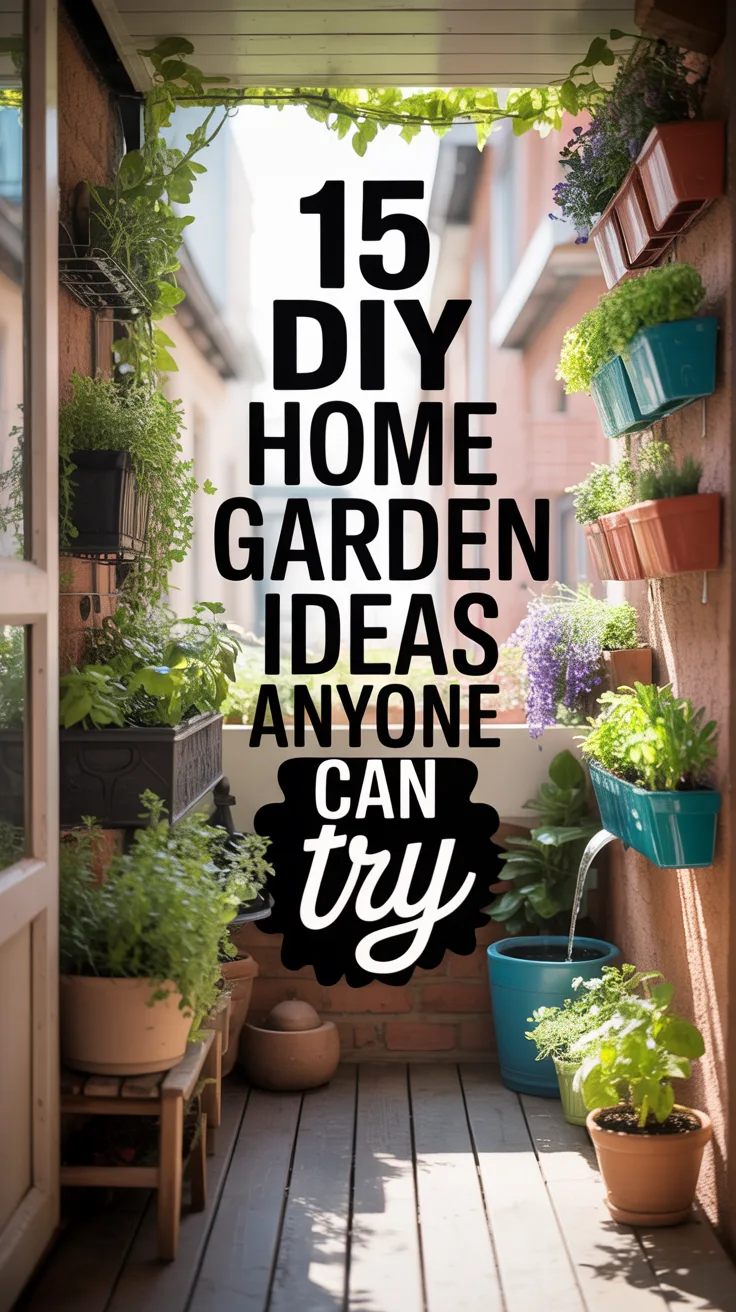
There’s something deeply satisfying about creating your own garden space, even if you’ve never considered yourself to have a green thumb. I’ve transformed my small urban balcony into a thriving mini-ecosystem, and trust me, if I can do it, anyone can! Whether you have acres of land or just a sunny windowsill, these DIY home garden ideas can help you bring more greenery into your life. I’ve personally tried each of these methods and compiled my favorites that are accessible, affordable, and genuinely enjoyable to create.
Vertical Gardens
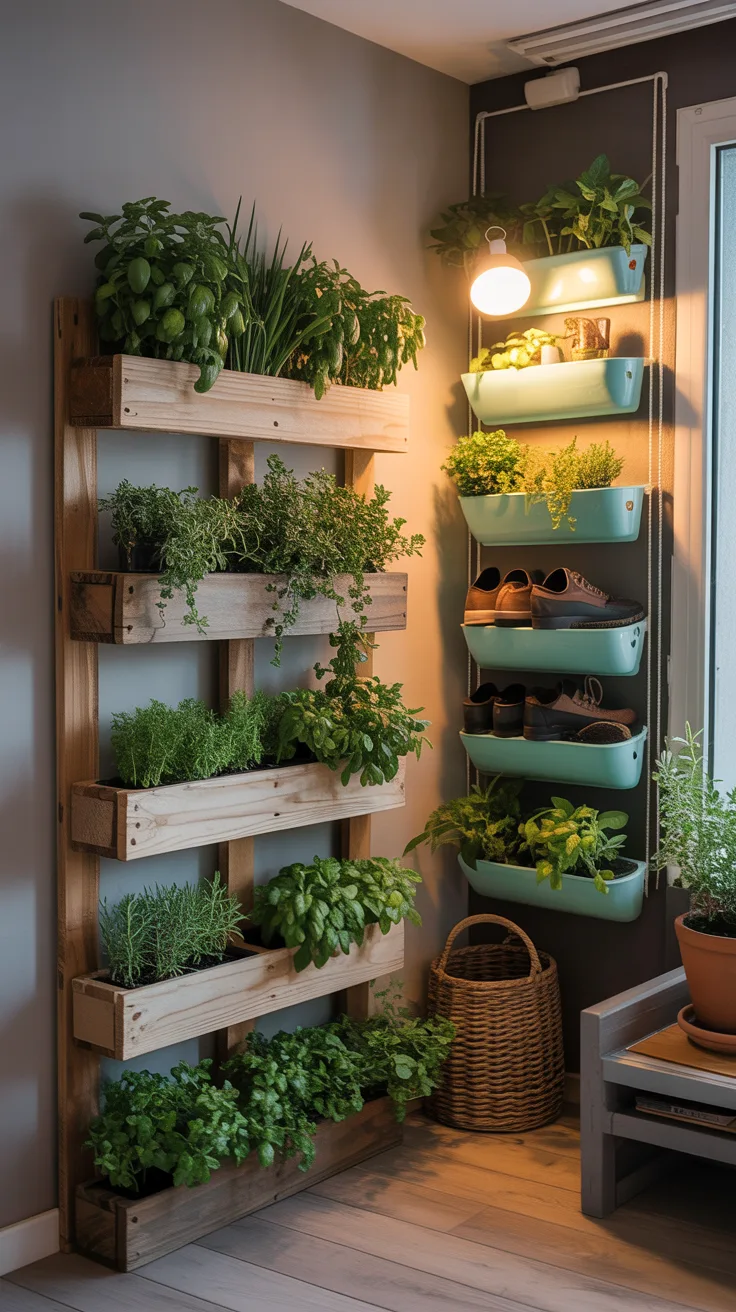
When I first moved into my apartment, I was devastated by the lack of outdoor space. That’s when I discovered vertical gardening—a game-changer for small-space dwellers like me. By growing upward instead of outward, you can create a lush garden without sacrificing precious floor space.
- Pallet Gardens: I transformed an old wooden pallet into a vertical herb garden by sanding it down, adding landscape fabric, and filling it with soil. It now houses my basil, thyme, and mint collection.
- Hanging Pocket Organizers: That shoe organizer gathering dust in your closet? It makes an excellent vertical planter! I drilled drainage holes in each pocket and filled them with small plants.
- Tiered Planters: Building a simple wooden structure with multiple levels allowed me to stack plants vertically while maintaining easy access for watering.
- Trellis Systems: For vining plants like cucumbers and beans, a simple trellis can create a beautiful living wall.
Pro Tip: When creating a vertical garden, always consider the weight of your containers when wet. I learned this lesson the hard way when my first attempt came crashing down during a rainstorm!
Container Gardening
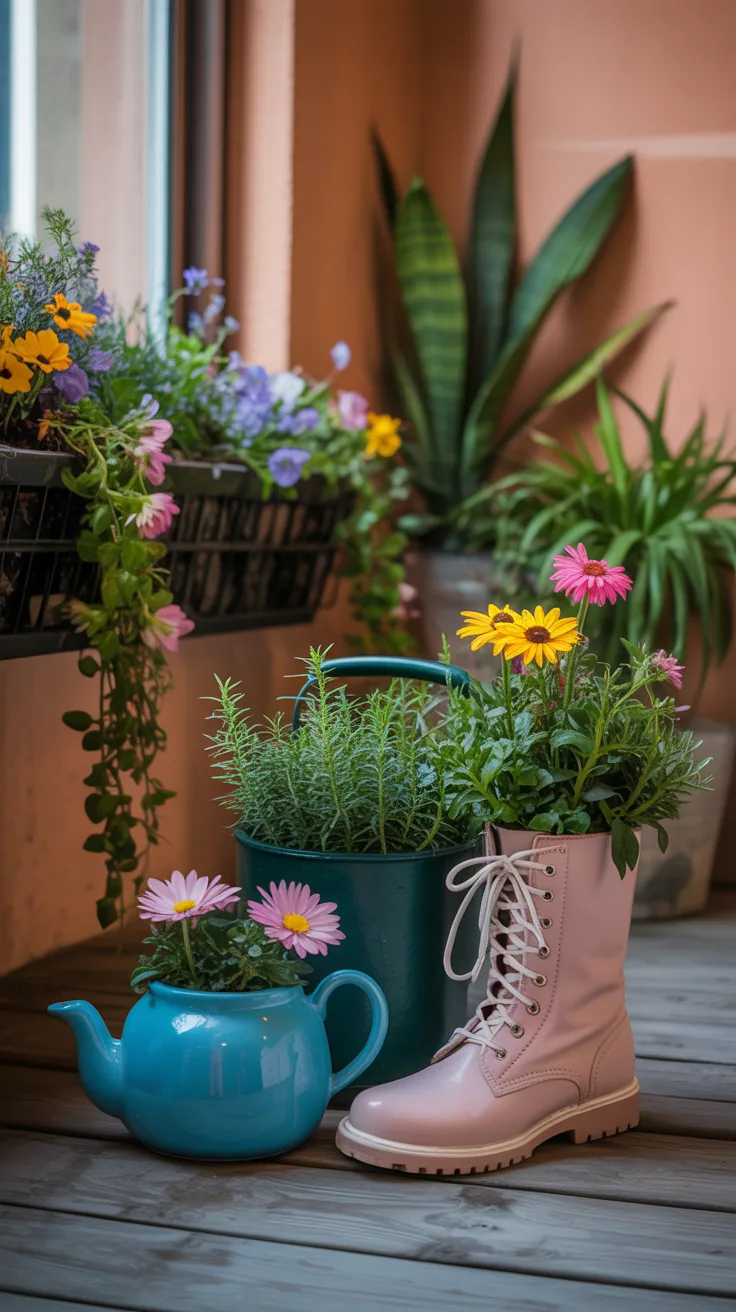
Container gardening revolutionized my approach to growing plants. The flexibility to move pots around to catch optimal sunlight or bring them indoors during harsh weather has saved countless plants in my garden.
- Upcycled Containers: I’ve used everything from old teapots to worn-out boots as planters. Just make sure to add drainage holes!
- Self-Watering Containers: Creating a simple reservoir system with a plastic bottle has helped me maintain consistent moisture for my thirstier plants.
- Window Boxes: These aren’t just for windows—I’ve attached them to my balcony railing for a beautiful display of cascading flowers.
- Fabric Grow Bags: These breathable containers prevent root circling and are perfect for growing potatoes and root vegetables.
Pro Tip: Group containers with similar watering needs together. I wasted so much time in my early gardening days running back and forth with my watering can before implementing this simple organization system.
Herb Gardens
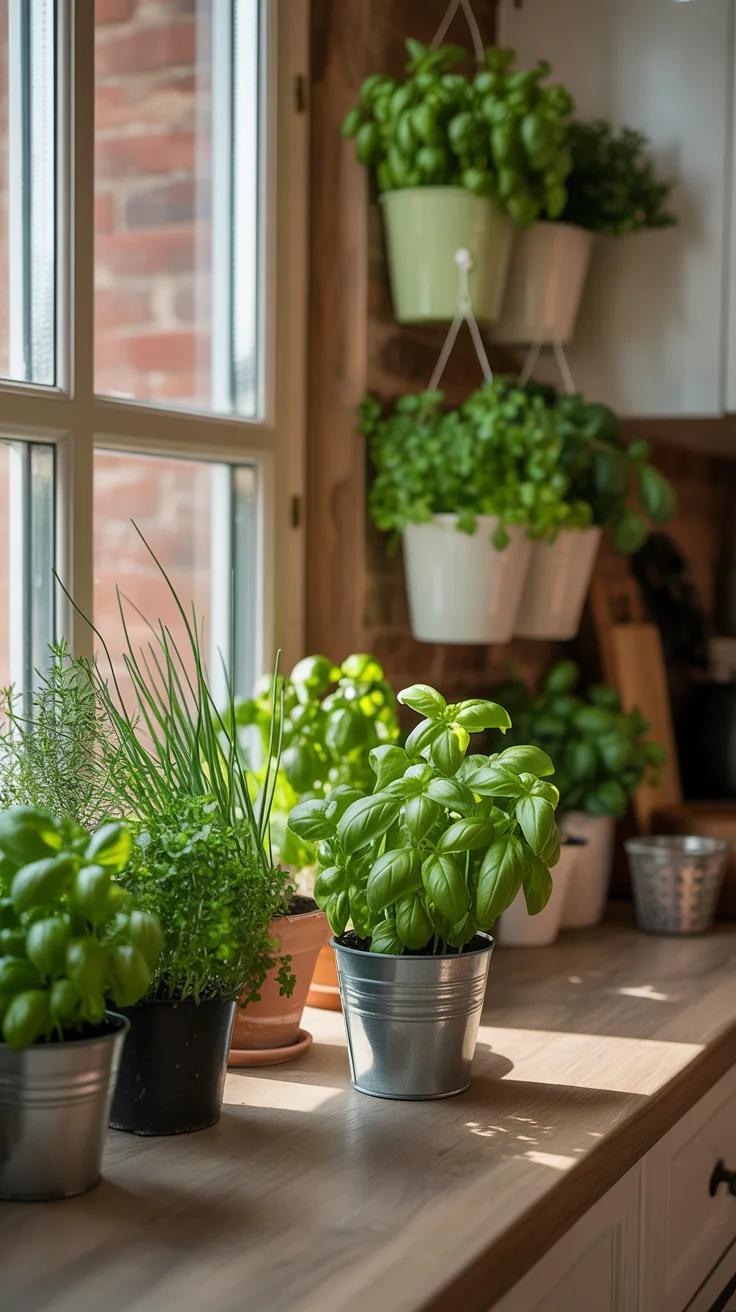
My DIY home garden journey actually began with herbs. There’s nothing like snipping fresh basil for your pasta sauce or mint for your mojito! Herbs are forgiving, practical, and many varieties are quite beautiful.
- Indoor Windowsill Garden: I keep basil, chives, and parsley on my kitchen windowsill for year-round fresh herbs.
- Hanging Herb Garden: Using small pots suspended from a rod, I created a space-saving herb display that doubles as kitchen decor.
- Herb Spiral: This permaculture-inspired design creates different microclimates in a small space, allowing you to grow herbs with varying needs together.
- Mason Jar Herbs: I propagated herb cuttings in water-filled mason jars, creating a beautiful and functional display.
Pro Tip: Harvest herbs regularly by pinching just above a leaf node to encourage bushier growth. I used to be timid about cutting my herbs until I realized that most thrive with regular trimming.
Raised Bed Gardens
When I finally moved to a place with a small yard, raised beds became my obsession. They’re easier to maintain, provide better drainage, and can be built to a height that reduces back strain.
- Simple Wooden Frames: My first raised bed was just four cedar boards screwed together—nothing fancy, but incredibly effective.
- Concrete Block Beds: Stacking concrete blocks creates sturdy, long-lasting beds with bonus planting pockets in the block holes.
- Elevated Raised Beds: Building beds with legs has been a game-changer for my elderly neighbor who can now garden without bending.
- Hugelkultur Beds: I experimented with this permaculture technique of burying wood under soil to create a self-fertilizing, water-retaining garden bed.
Pro Tip: Fill the bottom third of deep raised beds with sticks, leaves, and compost materials. This reduces the amount of soil needed while creating excellent drainage and eventually breaking down into nutrients.
Water Features
Adding water to my garden created a whole new dimension—the sound alone transforms the space into a peaceful retreat. Plus, it attracts beneficial wildlife like birds and pollinators.
- Container Pond: I turned an old whiskey barrel into a miniature pond with water plants and a small solar fountain.
- Recycled Fountain: An old ceramic pot, a small pump, and some creative stacking created a charming fountain that birds love.
- Rain Chain: Replacing a downspout with a decorative chain directs rainwater while creating a beautiful water feature during storms.
- Bird Bath: A simple shallow dish on a pedestal brings birds to my garden daily, adding movement and life.
Pro Tip: For small water features, use aquatic plants like water lettuce or miniature water lilies to keep the water clear naturally. I learned this after fighting algae for months in my first pond attempt!
Wildlife-Friendly Gardens
Creating a DIY home garden that welcomes wildlife has been the most rewarding aspect of my gardening journey. There’s nothing like watching butterflies, bees, and birds enjoy the habitat you’ve created.
- Pollinator Patches: I dedicated a sunny corner to native flowering plants that provide nectar throughout the growing season.
- Insect Hotels: Building a structure with various materials like hollow stems, pinecones, and drilled wood blocks provides habitat for beneficial insects.
- Bird Feeding Stations: Beyond traditional feeders, I planted sunflowers and coneflowers that provide natural bird food.
- Brush Piles: In a hidden corner, I maintain a small pile of branches and leaves that provides shelter for small creatures.
Pro Tip: Leave some areas of your garden slightly “messy” with fallen leaves and seed heads intact, especially during winter. What I once considered garden cleanup I now recognize as removing crucial wildlife habitat!
Frequently Asked Questions
What are the easiest plants to grow for beginners?
As a beginner, I had great success with radishes, lettuce, zinnias, and marigolds. Herbs like mint, basil, and chives are also very forgiving. Succulents are perfect if you tend to forget watering, while pothos and spider plants are nearly indestructible indoors. Start with these confidence-builders before tackling more challenging plants.
How can I maintain my garden with limited time?
Time management was my biggest gardening challenge until I implemented a few strategies: install a simple drip irrigation system with a timer, use mulch generously to suppress weeds and retain moisture, choose perennials over annuals when possible, and group plants with similar needs together. I also spend 10 minutes daily on maintenance rather than hours on weekends.
What are some common mistakes to avoid in home gardening?
I’ve made nearly every mistake possible! The biggest ones include overwatering (more plants die from drowning than drought), planting too closely together (always respect spacing guidelines), ignoring your specific light conditions (be honest about how much sun you actually get), and starting too big (begin with a manageable size and expand gradually). Also, test your soil before amending it—I once added lime to already alkaline soil based on generic advice.