Introduction
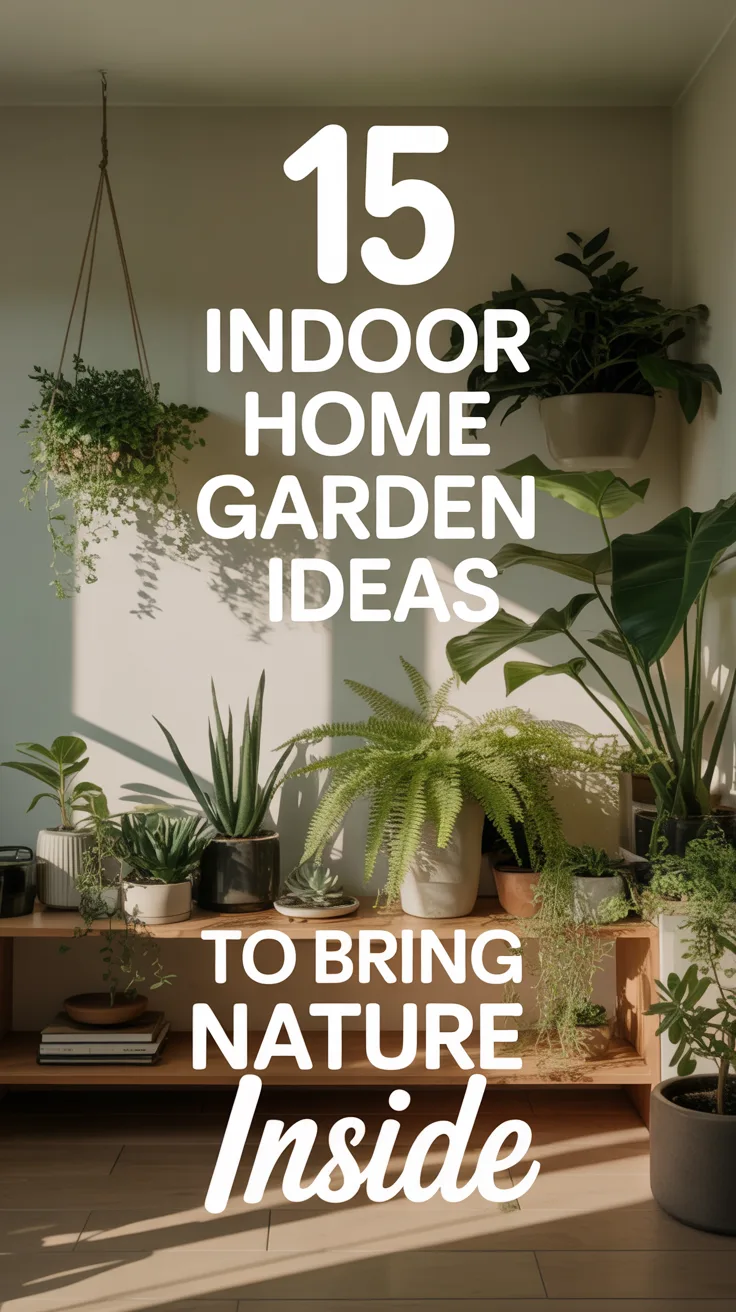
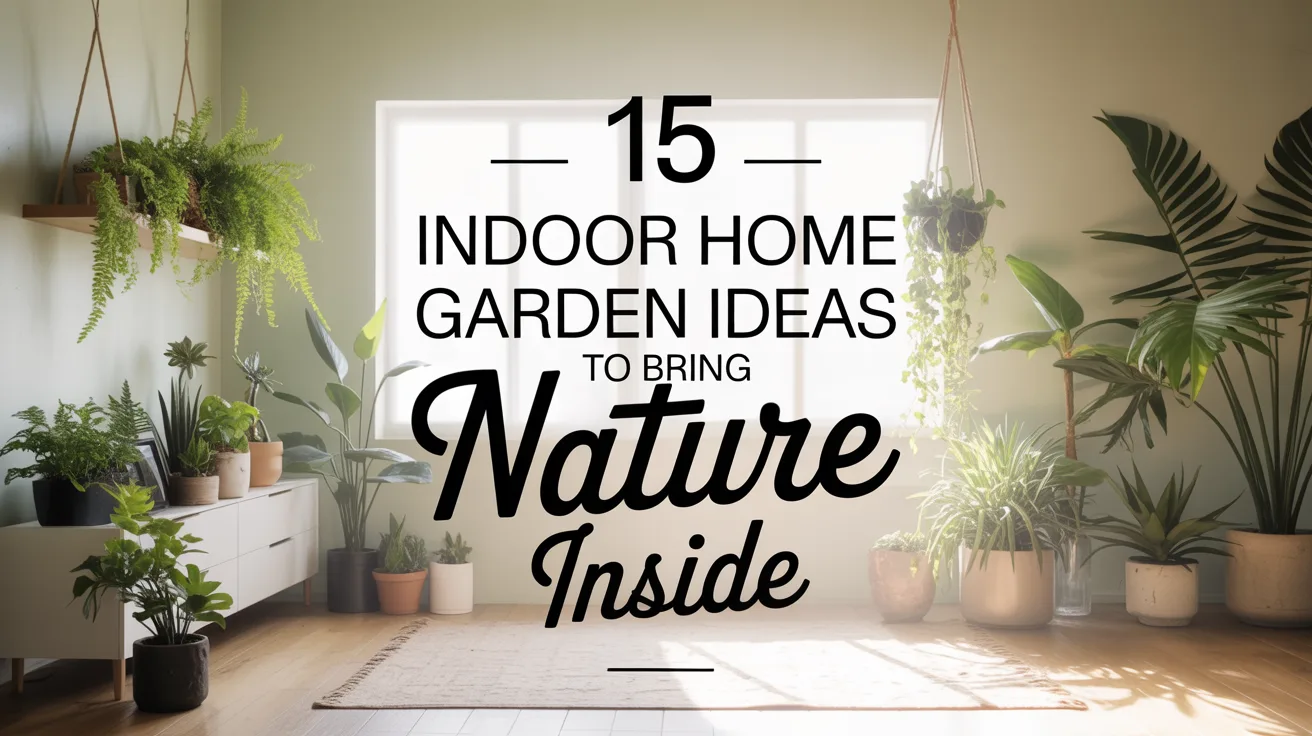
There’s something magical about surrounding yourself with greenery, even when you live in a space-challenged apartment or a home with limited outdoor access. As someone who’s transformed my own small urban apartment into a lush oasis, I can tell you that indoor home gardens not only beautify your space but also improve air quality and boost your mood. After killing more plants than I care to admit, I’ve discovered some truly effective ways to bring nature inside without requiring a green thumb or vast spaces. Let me share 15 creative indoor home garden ideas that have worked wonderfully for me and can transform your living space too.
Vertical Gardens
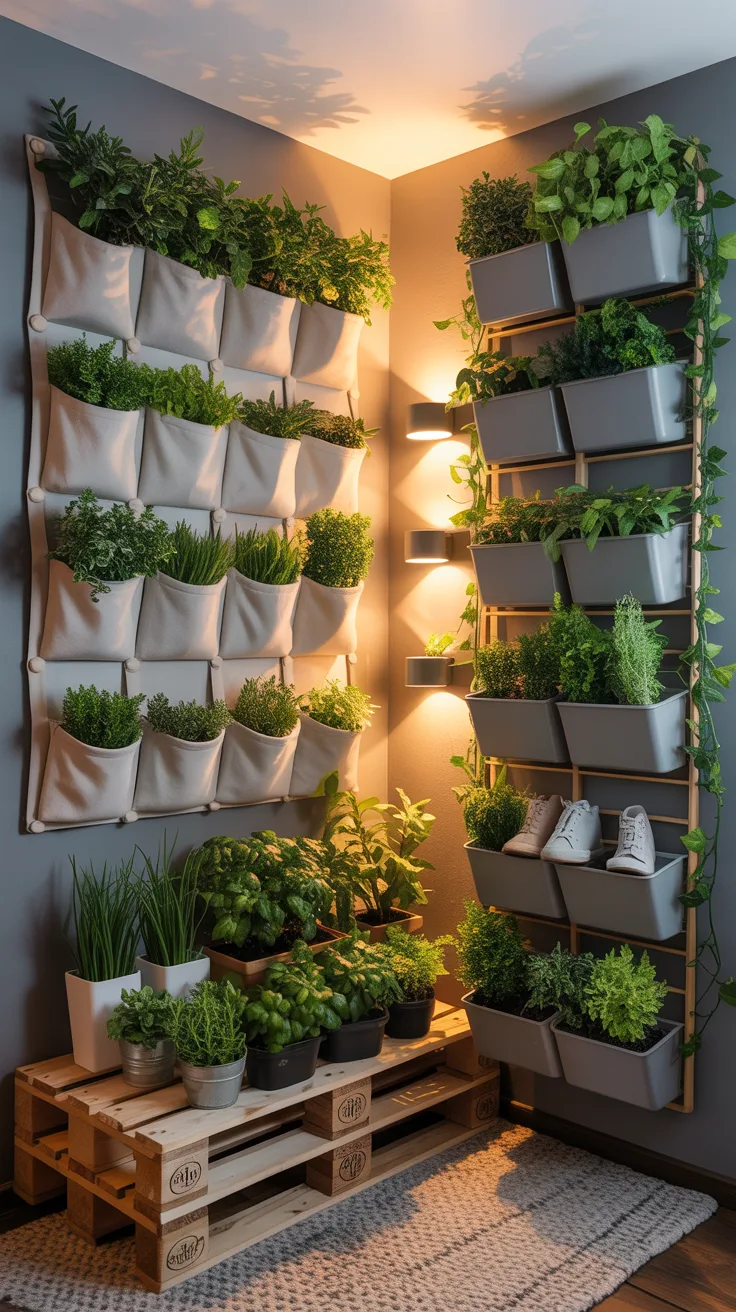
When I first moved into my tiny apartment, I quickly realized horizontal space was precious. That’s when I discovered the game-changer: vertical gardens. Instead of spreading out, I went up! Using wall space for plants dramatically expanded my growing capacity without sacrificing valuable floor space.
Here are some vertical garden options I’ve tried with success:
- Pocket planters: Fabric wall pockets that hold individual plants and can be hung like artwork
- Pallet gardens: Repurposed wooden pallets mounted on walls with plants tucked between slats
- Modular wall systems: Interlocking containers that create customizable living walls
- Trellis setups: Wall-mounted grids that support climbing plants like pothos or ivy
- Shoe organizers: Repurposed hanging fabric organizers with plants in each pocket
Pro Tip: When creating a vertical garden, install a plastic sheet or waterproof barrier behind it to protect your walls from moisture damage. I learned this the hard way after a water stain appeared on my living room wall!
Herb Gardens in the Kitchen
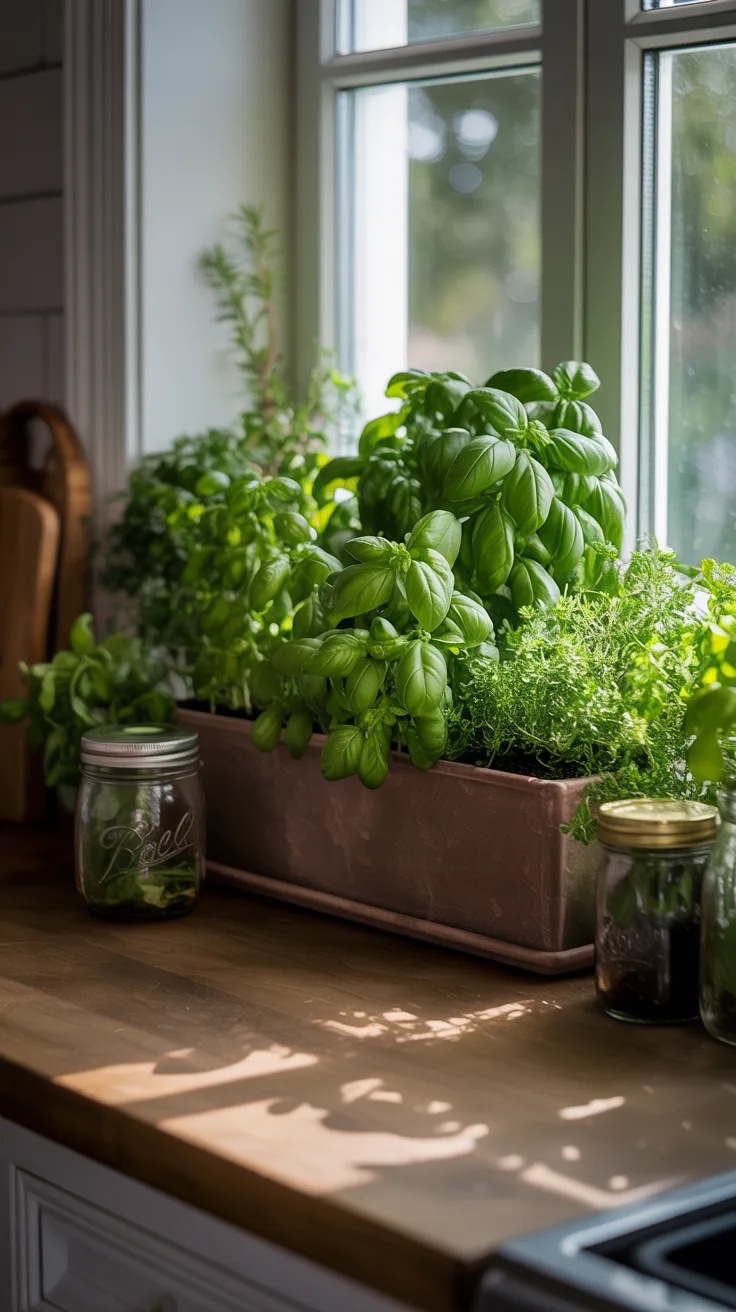
Nothing beats the convenience and flavor of snipping fresh herbs while cooking. My kitchen herb garden started with just basil and parsley, but expanded as I discovered how easy and rewarding it was. Now I have a mini herb farm that makes my cooking taste restaurant-quality.
Some of my favorite kitchen herb garden setups include:
- Window box planters: Long containers that fit perfectly on kitchen windowsills
- Mason jar gardens: Herbs planted in mason jars with pebbles for drainage
- Tiered stands: Multi-level plant stands that maximize vertical space
- Hanging herb baskets: Suspended from ceiling hooks near windows
- Magnetic planters: Small containers that stick to metal surfaces like refrigerators
Pro Tip: Group herbs by water needs rather than by cuisine. I once killed my rosemary by planting it alongside basil and mint, which need much more frequent watering. Mediterranean herbs like rosemary, thyme, and sage prefer drier conditions, while basil, cilantro, and parsley like more moisture.
Terrariums
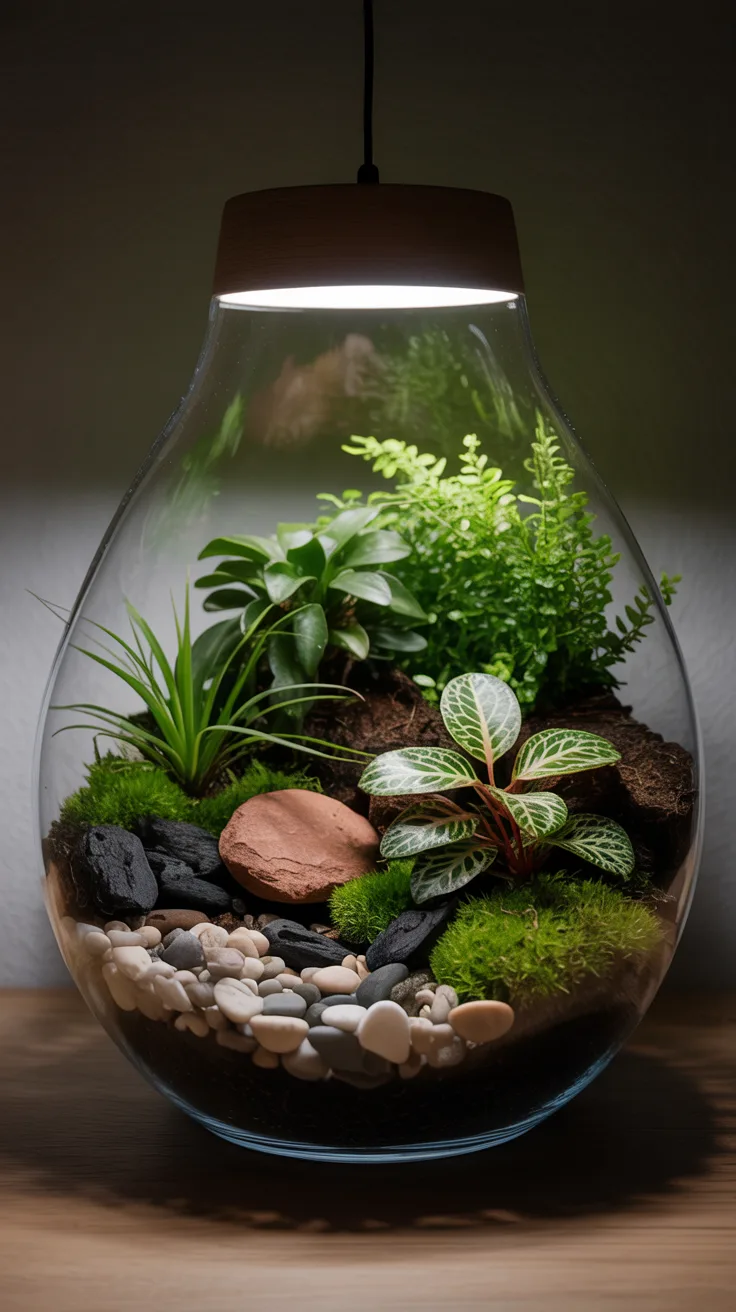
Terrariums are like miniature self-contained ecosystems that bring a touch of whimsy to any space. I became obsessed with terrariums after creating my first one three years ago, and now I have them scattered throughout my home. They’re particularly perfect for bathrooms and other spaces where humidity tends to be higher.
Creating a terrarium is surprisingly simple. I start with a layer of small pebbles for drainage, add activated charcoal to keep the environment fresh, then a layer of sphagnum moss to prevent soil from sifting down. Finally, I add potting soil and carefully selected small plants. Closed terrariums create their own water cycle, requiring minimal maintenance, while open ones need occasional misting.
For plant selection, I’ve had success with fittonia (nerve plant), small ferns, moss, and miniature African violets. The key is choosing plants that thrive in high humidity and don’t grow too quickly.
Pro Tip: Use long tweezers or chopsticks for precise plant placement inside narrow-mouthed containers. This saves a lot of frustration compared to trying to maneuver plants with your fingers!
Hanging Planters
When I ran out of surface space for my growing plant collection, I looked up—literally! Hanging planters allowed me to add greenery without sacrificing precious table or floor space. Plus, they create a dynamic visual element by adding interest at different heights.
My favorite hanging planter ideas include:
- Macramé plant hangers: These add a boho touch while suspending plants at adjustable heights
- Kokedama: Japanese moss balls that suspend plants without traditional pots
- Hanging terrariums: Glass globes that create floating garden displays
- Repurposed colanders: Kitchen colanders repurposed as hanging planters with built-in drainage
- Hanging herb rings: Circular frames that support multiple small herb pots
Pro Tip: Always use ceiling anchors rated for at least twice the weight of your plant and pot when fully watered. I once had a beautiful hanging fern come crashing down during a dinner party because I underestimated its weight and used an inadequate hook!
Succulent Arrangements
Succulents were my gateway plants when I first started my indoor gardening journey. Their sculptural forms, varied colors, and forgiving nature make them perfect for beginners and busy people alike. I’ve created countless succulent arrangements over the years, from simple pots to elaborate dish gardens.
What makes succulents special for indoor home gardens is their ability to store water in their leaves, making them incredibly drought-tolerant. They’re perfect for sunny windowsills and bright spots where other plants might struggle. I’ve found that mixing different varieties creates the most visually interesting displays—combining various shapes, sizes, and colors for a miniature landscape effect.
For containers, think beyond traditional pots. I’ve used teacups, driftwood with hollowed sections, vintage tins, and even old books with carved-out centers. Just make sure whatever container you use has drainage or a layer of pebbles at the bottom to prevent root rot.
Pro Tip: Water succulents much less frequently than you think necessary. I nearly killed my first collection by watering weekly—most indoor succulents only need water every 2-3 weeks, and even less in winter.
Aquatic Gardens
Aquatic gardens bring a unique dimension to indoor gardening with their reflective surfaces and gentle movement. I started with a simple glass bowl containing a peace lily with its roots submerged in water, and I’ve since expanded to more elaborate setups.
Water gardens can be as simple as a few stems of lucky bamboo in a vase or as complex as a small aquarium with aquatic plants and fish. What I love about water gardening is the soothing presence it brings to a room—there’s something inherently calming about water elements in a home.
Some easy-to-grow aquatic plants I’ve had success with include water lettuce, water hyacinth, and floating ferns. For container options, I’ve used everything from glass cylinders and bowls to small decorative aquariums and even repurposed teapots (for smaller water plants).
Pro Tip: Change the water in simple water gardens weekly to prevent algae growth and odors. For setups with fish, invest in a small filter to maintain water quality and reduce maintenance.
Window Sill Gardens
Window sills are prime real estate in the indoor gardening world, offering direct access to that most precious resource: natural light. I’ve transformed every window sill in my home into a mini garden, each tailored to the specific light conditions.
Here are some of my favorite window sill garden ideas:
- Microgreens garden: Shallow trays for growing nutritious, fast-growing greens
- Citrus collection: Dwarf lemon, lime, or kumquat trees in bright south-facing windows
- Cacti display: Desert plants that thrive in the intense light of unobstructed windows
- Air plant arrangement: No soil needed, just bright indirect light and occasional misting
- Propagation station: Glass containers with plant cuttings developing roots
The key to successful window sill gardening is understanding your window’s exposure. South-facing windows provide the brightest light (perfect for sun-loving plants), east windows offer gentle morning sun (ideal for orchids and African violets), west windows provide afternoon heat (good for succulents and cacti), and north windows offer bright indirect light (suitable for ferns and other shade-lovers).
Pro Tip: Create a humidity tray for window sill plants by filling a shallow tray with pebbles and water, then placing plant pots on top of the pebbles (not directly in the water). This increases humidity around plants without making them soggy.
Frequently Asked Questions
What are the best plants for indoor gardening?
The best plants for indoor gardening depend on your light conditions and how much attention you can provide. For beginners or busy people, I recommend pothos, snake plants, ZZ plants, and spider plants—they’re nearly indestructible. If you have bright light, consider succulents, cacti, and fiddle leaf figs. For lower light areas, try peace lilies, ferns, and Chinese evergreens. My personal favorite all-around indoor plant is the pothos—it grows in almost any condition and can be propagated easily to expand your collection.
How do I maintain an indoor garden?
Maintaining an indoor garden comes down to understanding each plant’s needs. Generally, you’ll want to establish a watering routine (checking soil moisture rather than watering on a strict schedule), ensure adequate light (supplementing with grow lights if necessary), maintain appropriate humidity (especially important for tropical plants), fertilize occasionally during growing seasons, and inspect regularly for pests. I keep a plant journal to track care for my 40+ plants, noting when I water, fertilize, and repot each one.
What are common mistakes to avoid in indoor gardening?
The most common mistakes I’ve made (and seen others make) include overwatering (more plants die from too much water than too little), insufficient light (many plants labeled as “low light” still need bright indirect light), using pots without drainage holes, forgetting to acclimate new plants to your home’s conditions, and ignoring early signs of pest infestations. Another mistake is not considering your home’s temperature fluctuations—plants near drafty windows or heating vents can struggle even if other conditions are perfect.