Introduction
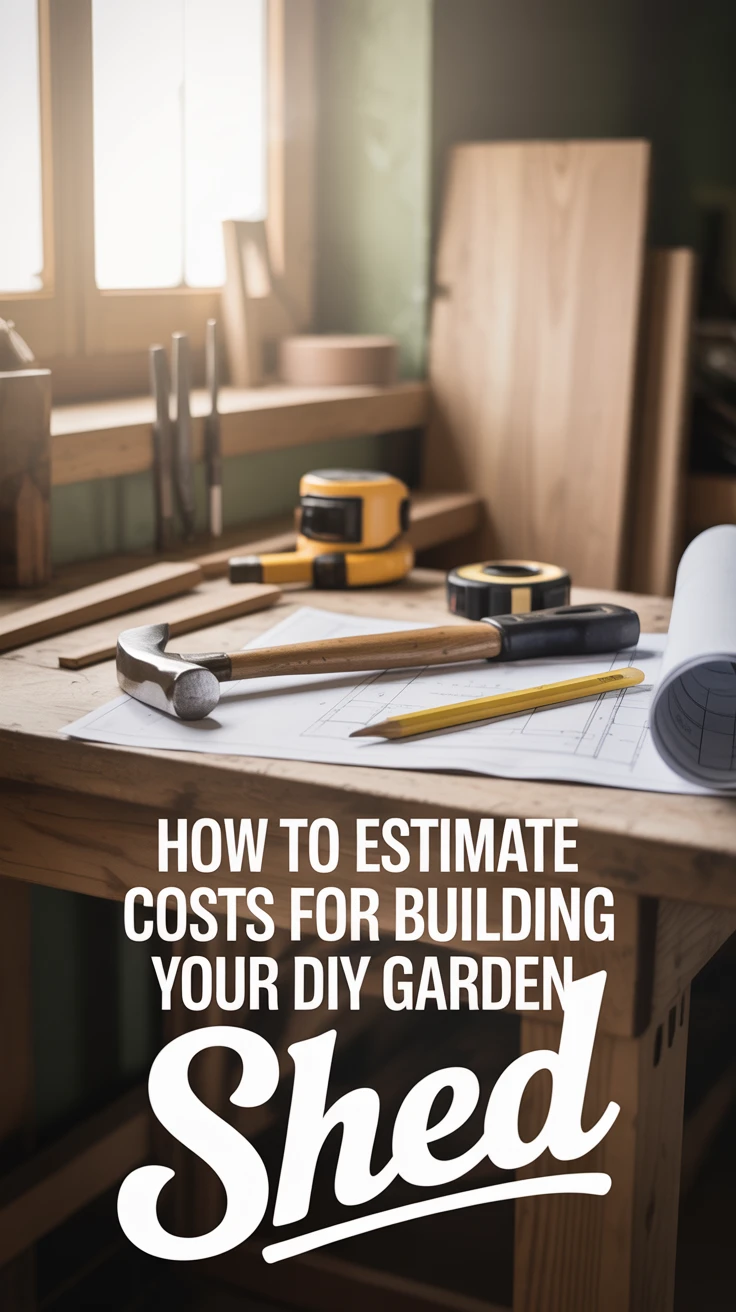
When I decided to build my first garden shed, I was completely unprepared for the financial surprises that popped up along the way. What started as a “simple weekend project” quickly turned into a month-long endeavor that cost nearly twice my initial budget. That painful experience taught me the importance of thorough shed cost estimation before picking up the first hammer.
Whether you’re planning a compact tool storage space or a larger garden retreat, accurate cost estimation is the foundation of any successful DIY shed project. Without it, you risk running out of funds mid-construction or compromising on quality to stay within budget. In this guide, I’ll walk you through the comprehensive process of estimating costs for your DIY garden shed, helping you avoid the mistakes I made and ensuring your project stays on track financially.
Planning Your DIY Garden Shed
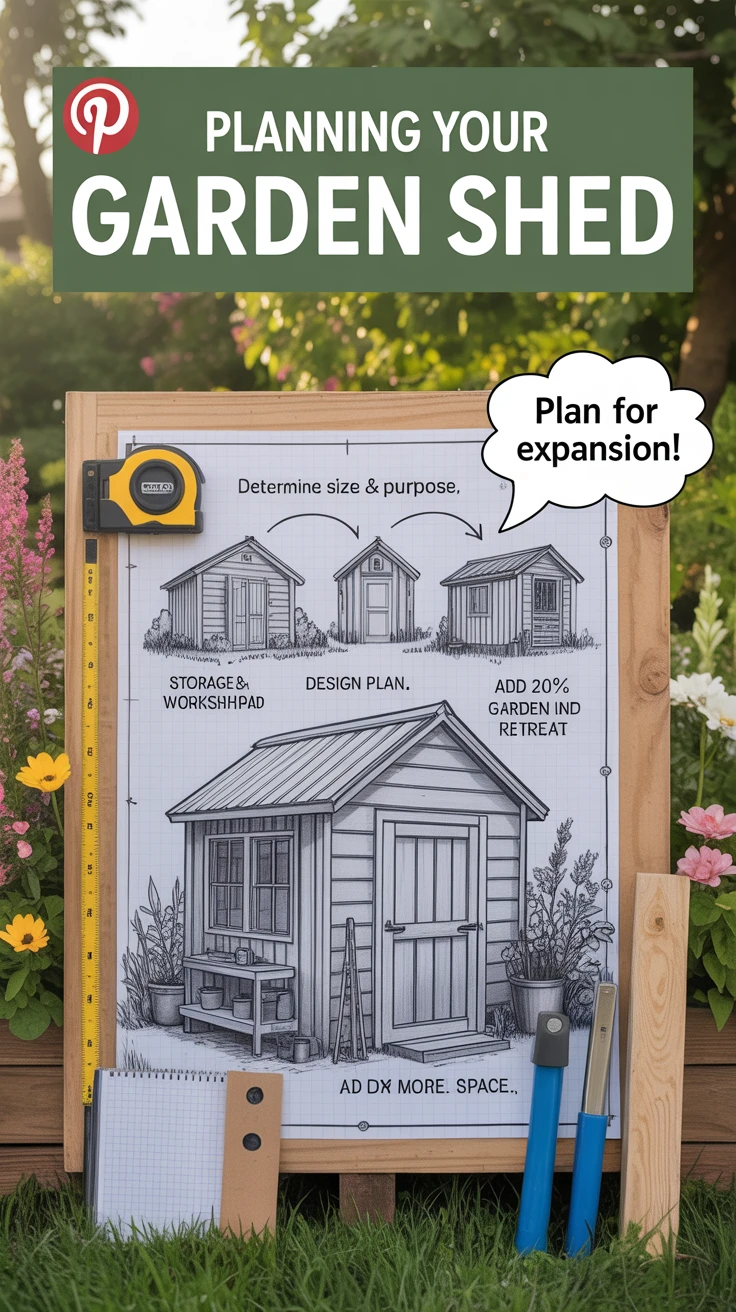
Before diving into specific costs, you need a clear vision of what you’re building. I’ve found that thorough planning at this stage can prevent costly changes later.
Determining Size and Purpose
The size and purpose of your shed directly impact your budget. When I built my second shed, I spent time carefully considering how I’d use the space, which saved me from building something too small (like my first attempt).
- Storage shed: Typically smaller and simpler, requiring fewer materials
- Workshop: Larger with additional features like windows, insulation, and electrical
- Garden retreat: May include decorative elements, windows, and higher-quality finishes
Pro Tip: Add 20% more space than you think you’ll need. In my experience, sheds fill up faster than expected, and expansion later is much more expensive than building the right size initially.
Creating a Detailed Design Plan
A detailed plan helps calculate materials accurately. When I skipped this step on my first shed, I ended up with multiple trips to the hardware store and wasted materials.
- Sketch your shed with precise measurements
- Research local building codes and permit requirements
- Consider foundation type (concrete slab, gravel base, or blocks)
- Plan for doors, windows, and ventilation
Materials Cost Estimation for Shed Building
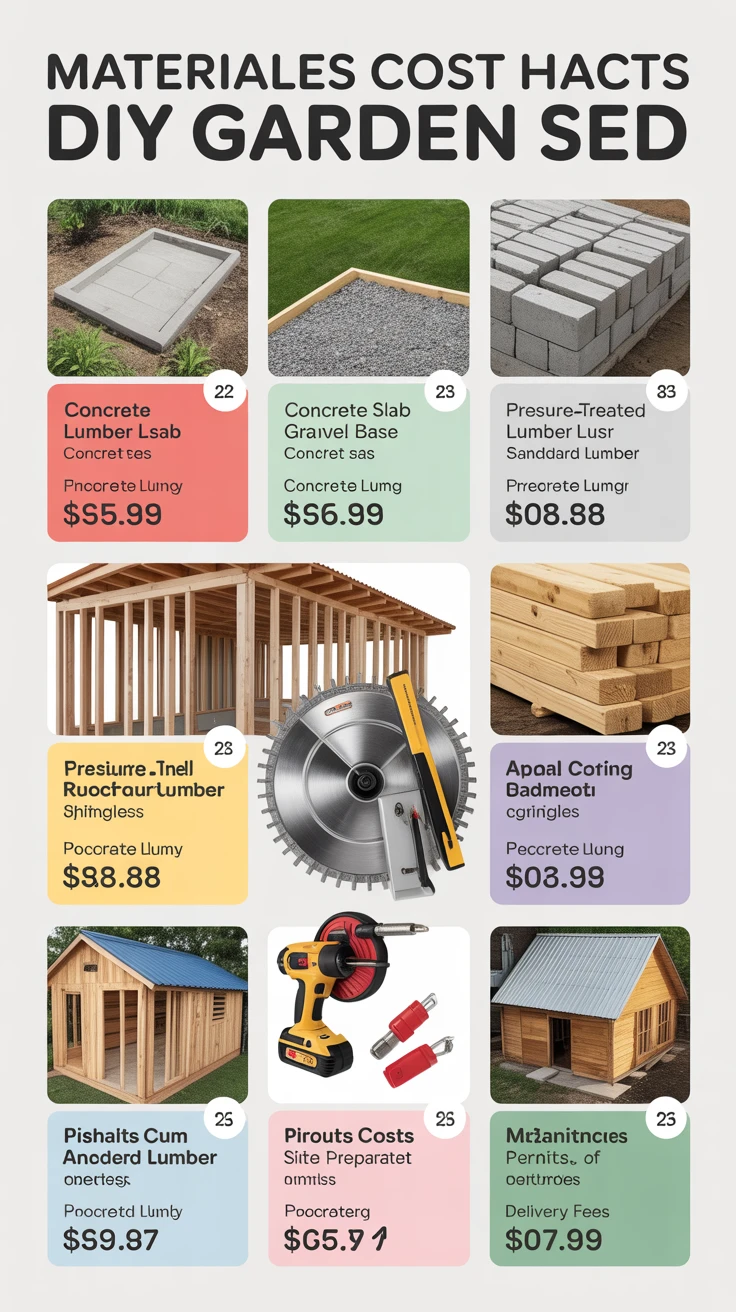
Materials typically represent the largest portion of your shed cost estimation. Breaking this down by component helps ensure nothing is overlooked.
Foundation Costs
The foundation is literally what everything else rests on. I learned this lesson when my first shed began to sink on one side due to an inadequate foundation.
- Concrete slab: $4-$8 per square foot (most expensive but most durable)
- Gravel base: $1-$3 per square foot (good drainage, moderate cost)
- Concrete blocks: $2-$4 per square foot (quick installation, good for smaller sheds)
Framing Materials
For my second shed, I invested in pressure-treated lumber for the bottom plates and was glad I did when we had unusual flooding that year.
- Pressure-treated lumber for ground contact: $8-$15 per 8-foot 2×4
- Standard framing lumber: $5-$10 per 8-foot 2×4
- Plywood/OSB for walls and roof: $30-$60 per 4×8 sheet
Pro Tip: Purchase framing lumber 10% over your calculated need to account for warped boards and cutting errors. This saved me multiple trips to the store during construction.
Roofing and Siding
These components protect your shed from the elements and significantly impact both appearance and longevity.
- Asphalt shingles: $80-$150 per 100 square feet
- Metal roofing: $100-$200 per 100 square feet
- Vinyl siding: $3-$7 per square foot
- Wood siding: $5-$10 per square foot
Tools and Equipment Costs
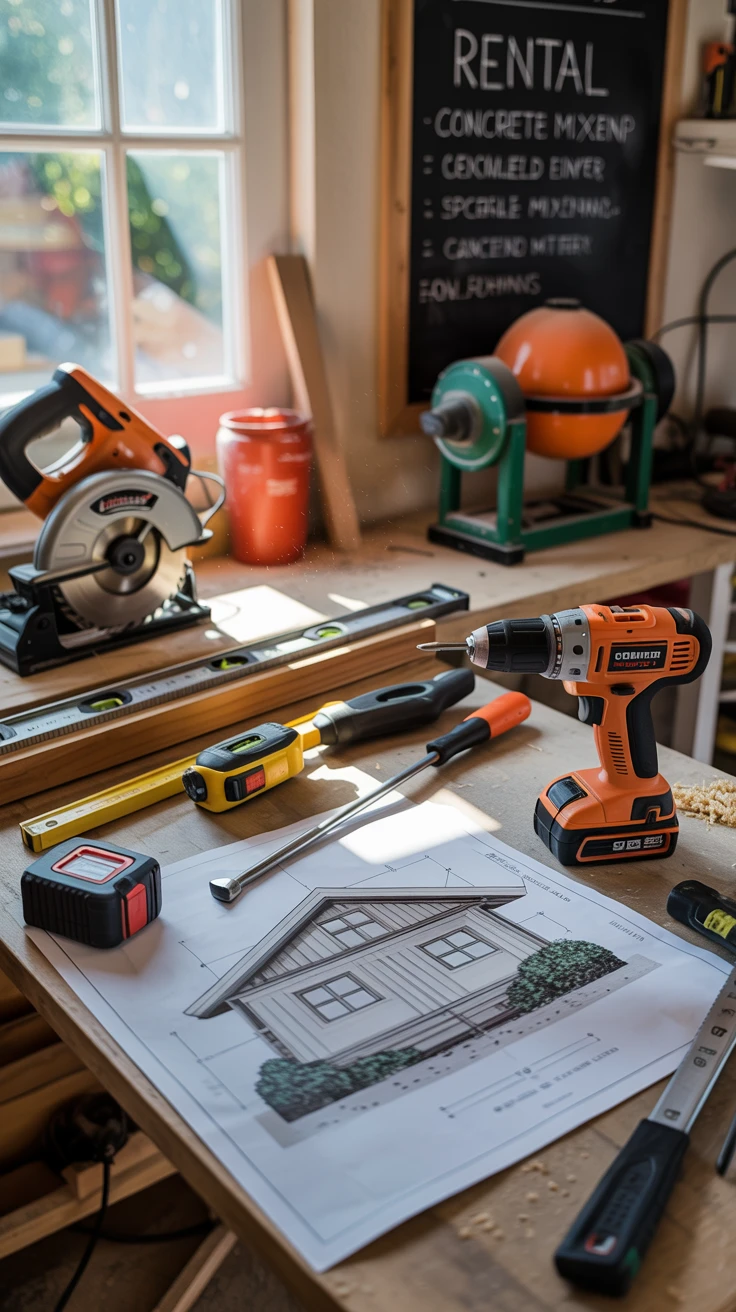
Having the right tools makes construction faster and more accurate. During my first build, I tried to make do with what I had, resulting in crooked walls and frustration.
Essential Tools
- Circular saw: $80-$150
- Cordless drill/driver: $75-$150
- Hammer: $15-$30
- Level (2′ and 4′): $20-$40
- Tape measure: $10-$25
- Square: $10-$20
Rent vs. Buy Analysis
For specialized tools used only briefly, renting often makes more financial sense. When building my shed, I rented a concrete mixer for a day instead of purchasing one.
- Consider buying: Tools you’ll use frequently or for multiple projects
- Consider renting: Specialized tools like nail guns, concrete mixers, or post hole diggers
Pro Tip: Check with neighbors or local tool libraries before purchasing expensive equipment. I borrowed a compressor and nail gun from my neighbor, saving over $300.
Labor Costs and Time Estimates
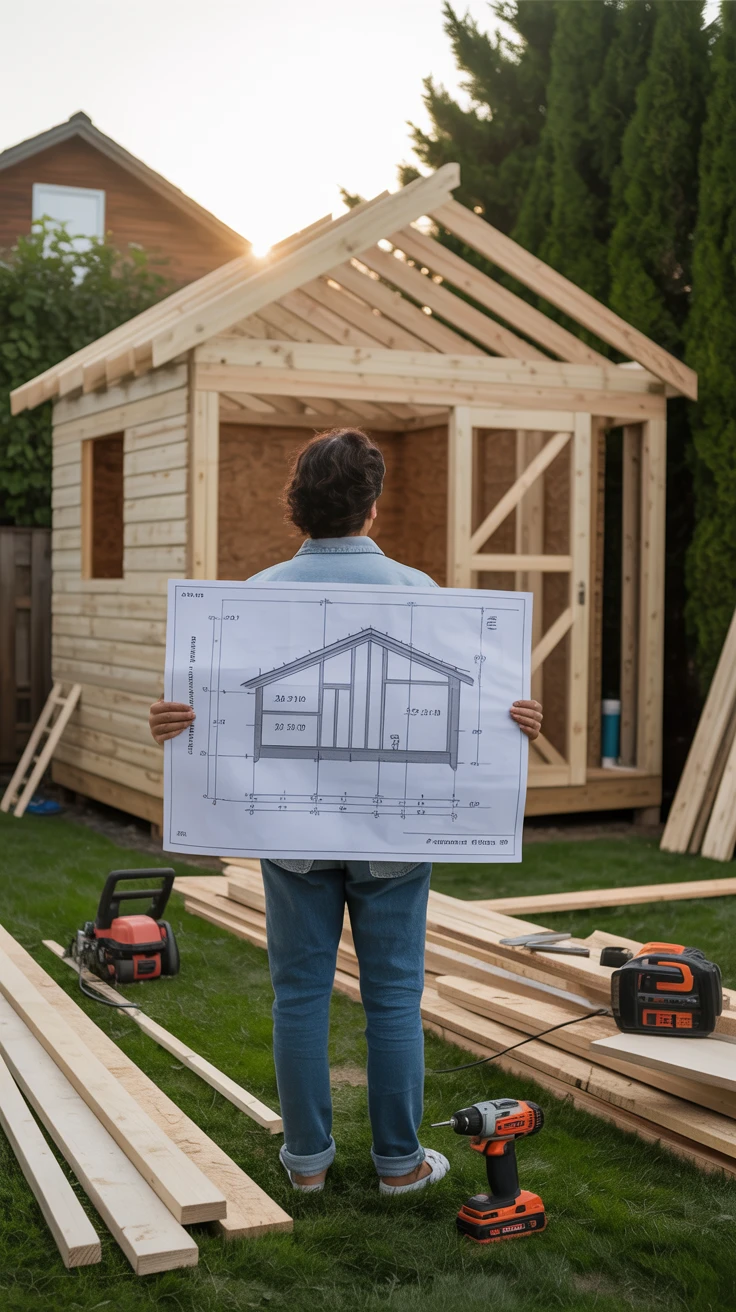
Even if you’re doing the work yourself, understanding the time commitment helps with planning and recognizing the value of your labor.
DIY Time Commitment
My 10×12 shed took approximately 60 hours to complete, spread over three weekends. Your time will vary based on experience and shed complexity.
- Small shed (8×8): 30-50 hours
- Medium shed (10×12): 50-80 hours
- Large shed (12×16): 80-120 hours
Valuing Your Time
While DIY saves on labor costs, it’s important to value your time. If your normal hourly rate is $30/hour and the shed takes 60 hours, that’s an “opportunity cost” of $1,800.
Pro Tip: Consider a hybrid approach. I hired help for the foundation and roof installation—the most physically demanding parts—while handling the framing and finishing myself.
Hidden and Additional Costs
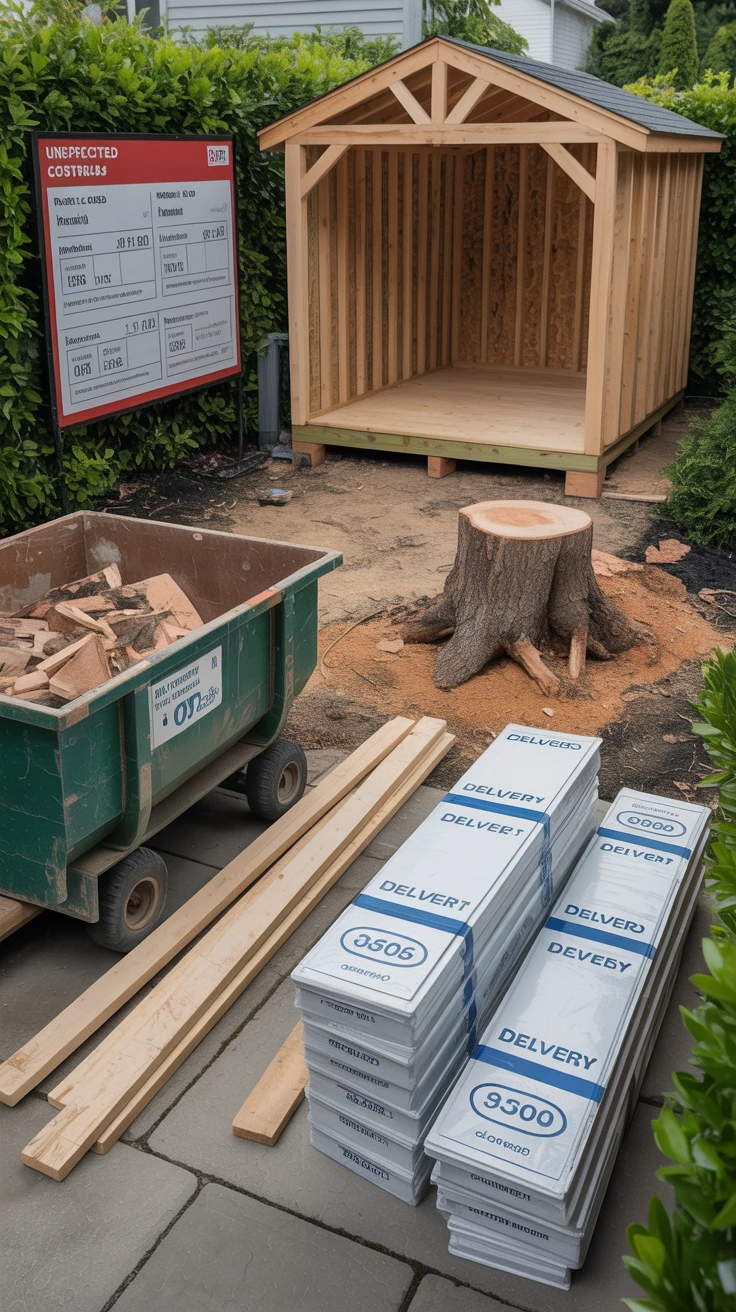
These often-overlooked expenses can quickly derail your shed cost estimation if not accounted for.
Permits and Inspections
I learned about permit requirements after starting my first shed—an expensive mistake that required modifications.
- Building permits: $50-$500 depending on location and shed size
- Inspection fees: $50-$200 per inspection
Site Preparation
- Tree/stump removal: $150-$500
- Grading/leveling: $100-$500
- Drainage solutions: $200-$1,000
Delivery and Disposal
- Material delivery fees: $50-$150
- Dumpster rental: $200-$400 for a week
- Debris disposal: $50-$200
Pro Tip: Always include a 15-20% contingency in your budget. On my second shed, this cushion covered unexpected drainage issues that would have otherwise strained my finances.
Pro Tips for Cost-saving and Efficiency
After building multiple sheds, I’ve discovered several strategies to reduce costs without compromising quality.
- Shop sales cycles: Lumber and building materials often go on sale seasonally. I saved nearly 30% on my roofing materials by purchasing in late fall.
- Use reclaimed materials: For my most recent shed, I used reclaimed barn wood for interior shelving and saved hundreds.
- Batch similar tasks: Do all cutting at once, all framing at once, etc. This improved my efficiency by about 20%.
- Simplify the design: Each corner, angle, or cut-out adds complexity and cost. My simple rectangular shed was far more economical than my neighbor’s octagonal design.
- Schedule deliveries strategically: Coordinate deliveries to minimize fees and ensure materials arrive when you need them.
Conclusion
Accurate shed cost estimation is the difference between a successful project and a financial headache. By thoroughly planning each aspect—from materials and tools to hidden costs and labor—you’ll approach your DIY garden shed with confidence and clarity.
Remember that every dollar spent on quality materials and proper preparation is an investment in the longevity and functionality of your shed. My first rushed, under-budgeted shed lasted barely five years, while my properly planned and budgeted second shed is still standing strong after a decade.
Take the time to create a comprehensive budget, add a contingency for unexpected expenses, and value your own time and effort. Your future self—organizing tools in a solid, weather-tight shed—will thank you for the thorough planning you do today.
Frequently Asked Questions
What is the average cost of building a DIY garden shed?
The average cost for a DIY garden shed ranges from $12-$25 per square foot, depending on materials and complexity. For a standard 10×12 shed, expect to spend $1,500-$3,000 for materials if using mid-range options. My 10×12 workshop shed with electrical and insulation cost approximately $2,800 in materials.
How do I decide on the best materials for my shed?
Consider three key factors: budget, durability requirements, and aesthetic preferences. For example, pressure-treated lumber costs more but resists rot and insects, making it ideal for humid climates. For roofing, asphalt shingles offer good value while metal roofing costs more upfront but lasts longer. Match materials to your local climate and how long you want the shed to last.
Can I save money by building the shed myself instead of buying a kit?
Yes, building from scratch typically saves 30-50% compared to equivalent-quality kits. However, this assumes you have basic carpentry skills and tools. Kits save time and require less expertise but offer less customization. In my experience, scratch-built sheds also allow you to use higher-quality materials in critical areas while economizing in others.
Do I need to include a contingency in my shed budget?
Absolutely. I recommend a 15-20% contingency for any DIY construction project. On every shed I’ve built, unexpected expenses arose—from discovering rocks during foundation digging to needing additional drainage solutions. Having this buffer prevents project delays and financial stress when surprises occur.
How can I reduce the cost of my shed without compromising quality?
Focus on simplifying design, sourcing materials strategically, and prioritizing quality only where it matters most. Use standard dimensions to minimize waste, consider reclaimed materials for non-structural elements, and invest in quality for foundation and roofing while economizing on finishes. I saved nearly $500 on my last shed by using standard dimensions that minimized cutting and waste.